Closing Enbridge’s Line 5 Pipeline
WHAT ARE THE OPTIONS AND ALTERNATIVES AVAILABLE?


WHAT ARE THE OPTIONS AND ALTERNATIVES AVAILABLE?

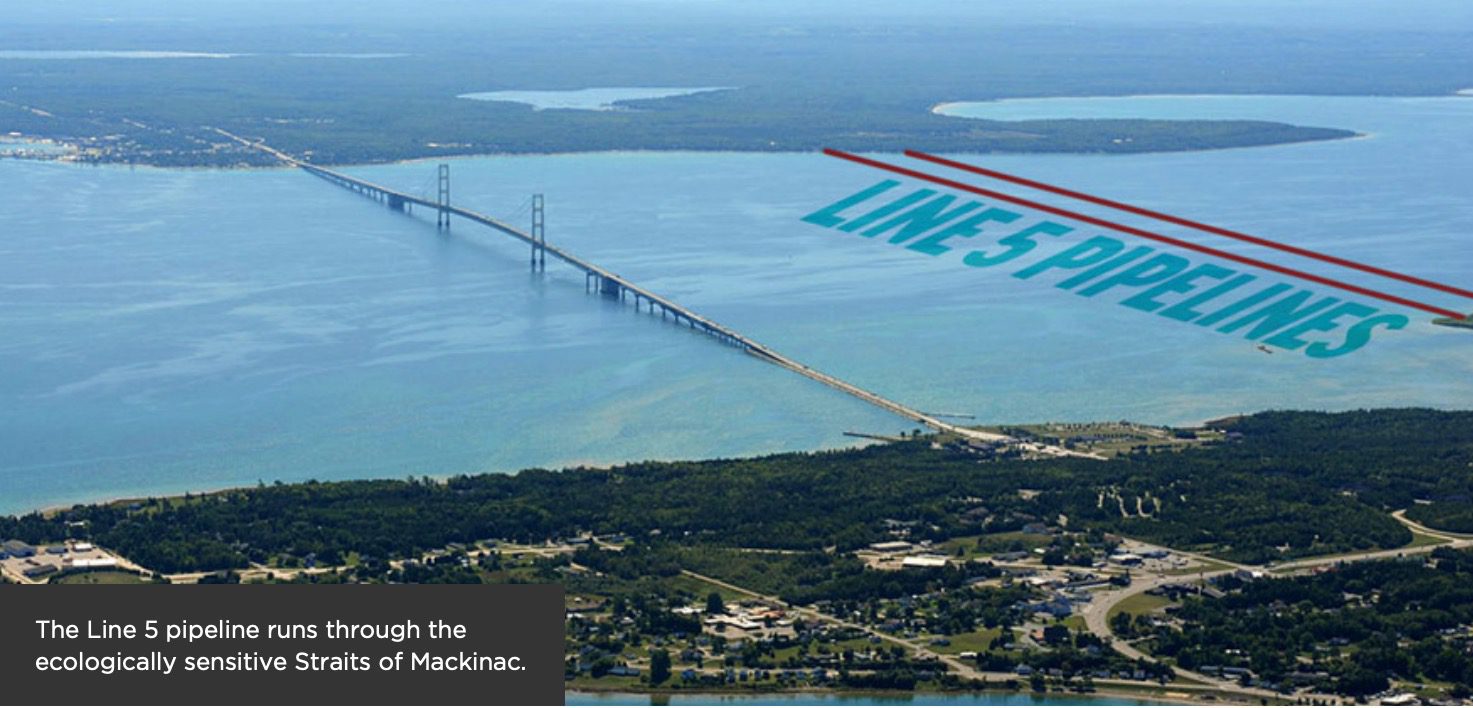
Line 5 is part of Enbridge’s Mainline System. It carries oil from Superior, Wisconsin, crosses through the Straits of Mackinac above the lakebed, and then carries on to Sarnia, Ontario. From there, some oil is offloaded to Sarnia refineries while some are shipped further East, predominantly via Line 9, to refineries in Quebec.
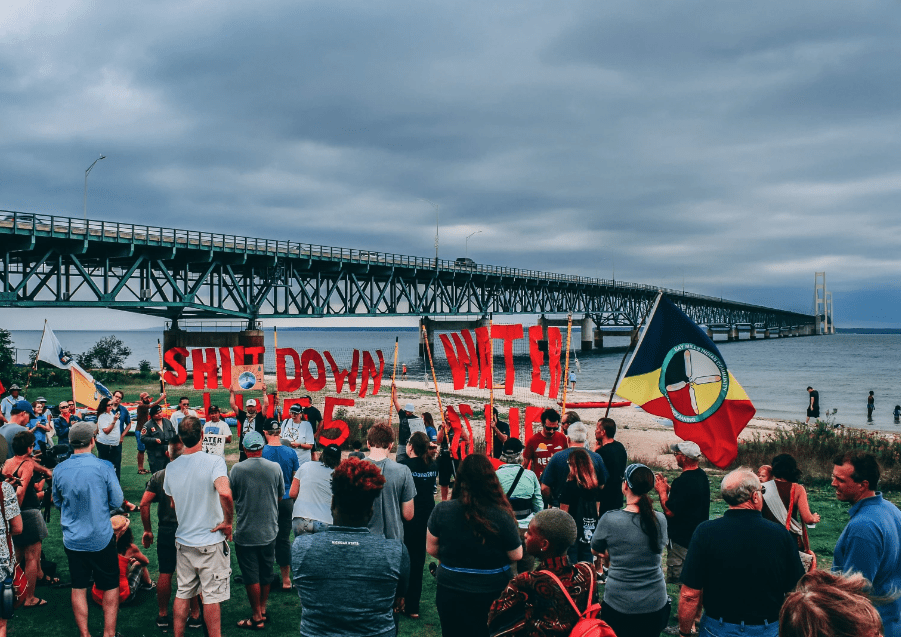
Enbridge’s Line 5 pipeline has been the subject of considerable debate in recent months and years. Opponents, including Michigan Governor Whitmer and Attorney General Nessel, Anishinaabeg Tribes in the U.S., Anishinaabeg First Nations in Canada, and environmental organizations on both sides of the border all want the pipeline shut down due to the risk it poses to the Great Lakes - the largest body of freshwater in the world. In addition to the mandated shut down orders given by Michigan’s Governor and Attorney General, Indigenous Nations in Wisconsin and Michigan are involved in legal cases to shut down the pipeline. Furthermore, all 12 Tribal Nations in Michigan have also passed resolutions calling for Line 5’s closure. The Anishinabek Nation, which represents 39 First Nations in Ontario, has stated its support for the closure of Line 5.
The closure of Line 5 is inevitable - either through a mandated shut down order or due to a rupture.
This report clearly demonstrates that viable options can be implemented to meet our crude oil energy demands that don’t involve continuing to put 84 per cent of North America’s freshwater - which is contained within the Great Lakes - at imminent risk.
Litres of oil that have been spilled into surrounding lands and waters
Studies have shown that a worst-case oil spill from Line 5 would cause damages up to at least
Number of times Line 5 has leaked since 1953
Percentage of North America’s freshwater held in the Great Lakes
Going forward, we believe the Canadian government has an obligation to:
Governments have a responsibility to protect the best interests of the people and the environment. The reasons for shutting down Line 5 are significant and strong. This report shows that shutting down Line 5 is possible while still meeting our present-day and near-term crude oil energy needs.
We do not need to choose between prioritizing the protection of the Great Lakes and the planet and having a reliable energy supply - when we can achieve both. However, in the years to come, it will be necessary to end our energy dependence on oil once and for all. The threat that moving oil poses to the lands and waters it passes and the existential crisis that the climate emergency poses to humanity are immense.

ACKNOWLEDGEMENTS: Produced by ENVIRONMENTAL DEFENCE. Written by Michelle Woodhouse and Keith Brooks with contributions by Lauren Thomas. For a full list of contributors please download the report.
© Copyright February 2021 by ENVIRONMENTAL DEFENCE CANADA. Permission is granted to the public to reproduce or disseminate this report, in part, or in whole, free of charge, in any format or medium without requiring specific permission. Any errors or omissions are the responsibility of ENVIRONMENTAL DEFENCE CANADA.


