The new blue box program is not even a year old and the government is already proposing to let the companies responsible for collecting and recycling our discarded packaging off the hook, and leave municipalities and residents holding the bag. You know what that means: a bigger bill for you, me — and the environment. The province wants to further gut the program by the end of the year, and you have until the end of November to weigh in.
As we’ve explained before, the new blue box system was never meant to be just a privatized recycling program. Its purpose was to make the companies that put all that throwaway packaging on the market responsible for dealing with the mess after we’ve unwrapped their products. In the lingo of provincial waste policy, these companies are called “producers.”
Municipalities used to be responsible for emptying our blue boxes and trying to recycle what was inside. They already knew how expensive and difficult it is to manage today’s mountains of single-use packaging. Anyone could have guessed that, all things being equal, the new blue box program was going to be expensive and difficult for producers too. But the point was certainly NOT to keep all things equal.
The key idea behind “extended producer responsibility” is simple: make producers pay the full costs of their packaging decisions. If a package is a nightmare to collect, reuse or recycle, the company behind it has the power to change it, or get rid of it. That’s the incentive. This approach is becoming more and more common across North America.

The producers originally lobbied for this approach. But now that their bill has come due, these same companies are lobbying the province to make things cheaper for them by dumping the responsibility back onto municipalities and residents.
In the vanishingly short time between its “summer” break and the end-of-year holidays, the government is trying to ram through changes that would weaken the blue box program:
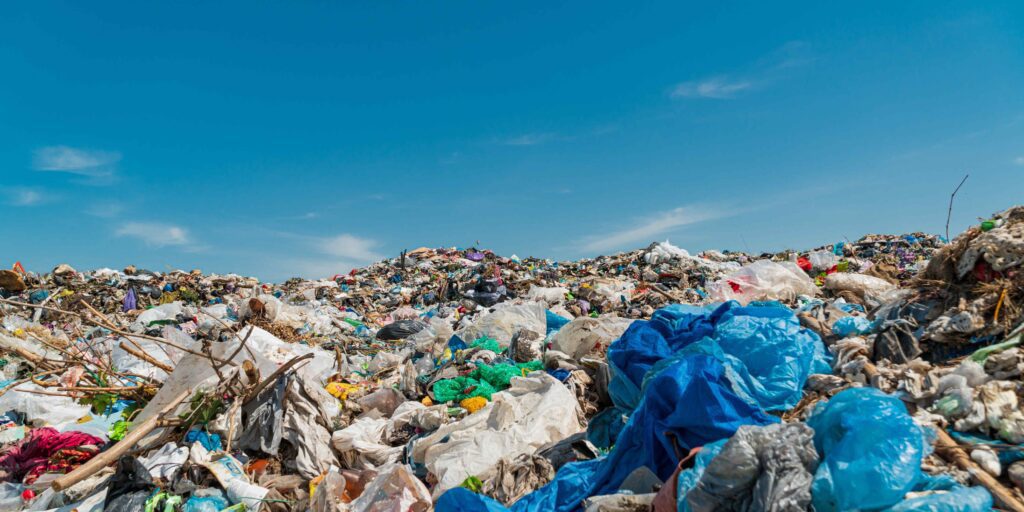
- “Flexible” plastic packaging would come off producers’ plates. Bags, films, wrappers and pouches riddled with their marketing pitches — and discarded after a very short use — would no longer be their responsibility. Municipalities would have to handle them as trash. That’s 80,000 tonnes of plastic garbage every year — and likely growing.
- Producers would no longer have to collect overflow recycling. The requirement to collect extra bags and bundles of recycling at the curb would end. You’d have to store it until a quieter week or, more likely, throw the more bulky stuff right in the trash.
TAKE ACTION: Write to the provincial government before the end of November to ask them not to weaken the Blue Box program.
The Blue Box rollback isn’t an isolated decision. It’s part of a pattern, and it’s one the waste lobby is winning. That lobby includes everyone from the companies that make plastic and packaging, to the companies that package the goods we buy, to the waste haulers and landfill and incinerator operators. Right now, they are sitting pretty.
More throwaway packaging means more waste. More waste means more landfills or incinerators. And the provincial government seems perfectly fine with that. In fact, they have tabled legislation to make it easier for companies to site a landfill or waste incinerator in your backyard. You’ll be paying the price of more local air and water pollution, with even less say on how to reduce waste in the first place.

There are better options:
- Expand deposit return to include all beverage containers to keep billions of bottles and cans out of landfills, incinerators and the environment.
- Strengthen, don’t weaken, rules for the blue box program to force companies to reduce trashy single-use packaging.
- Invest in refill/reuse, repair and sharing programs to put an end to disposablel products and packaging.
- Ban the disposal of organics in landfills or incinerators and require businesses to separate their waste just like we do at home and invest in composting programs.
Once you burn or bury something, it’s as good as gone.
TAKE ACTION: Tell the province you want waste reduction, not waste burning.