



This piece was originally published by Canada’s National Observer.
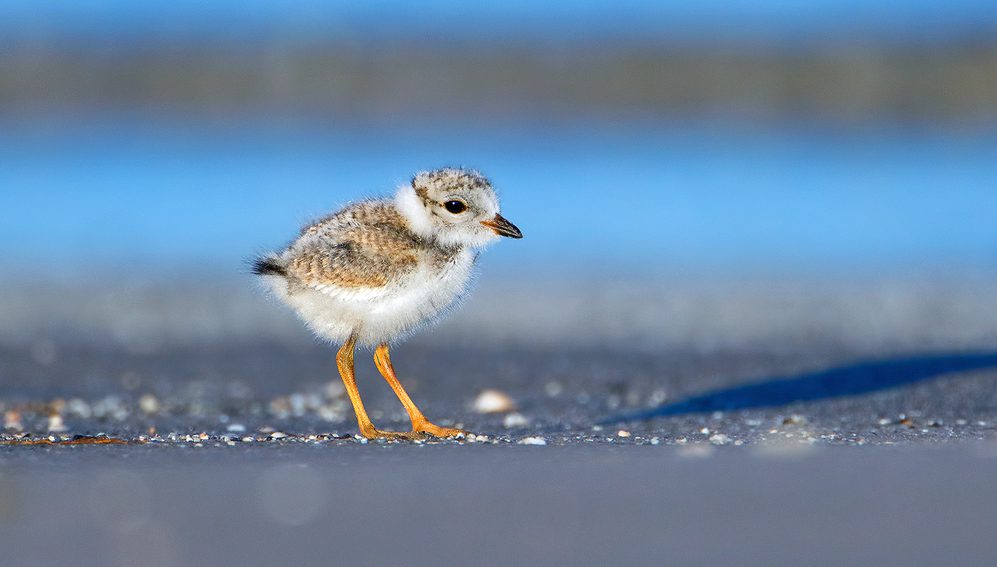
The re-establishment of Canada’s most important and successful breeding ground for the endangered Great Lakes piping plover alongside the 2 million beach goers who inundate Wasaga’s beaches each year has been an extraordinary accomplishment.
This precarious coexistence has only been possible because the bird’s habitat enjoyed extraordinary, double-layered protection:
- Both intensive, conservation-focused stewardship by provincial parks staff, under the Provincial Parks and Conservation Reserves Act, as part of Wasaga Beach Provincial Park; and
- Daunting, quasi-criminal penalties under the provincial Endangered Species Act.
By removing both these essential layers of protection within the space of just a few months, the Ontario government has created an imminent threat to the Wasaga breeding ground’s survival, and thus to the survival and recovery of Canada’s entire Great Lakes piping plover population.
While the Town of Wasaga Beach has tried to give the appearance of imitating the work of provincial park experts, none of those activities, nor the town’s new bylaws and policies, could plausibly be described as a substitute for the formidable protection that has been lost. The “imminent threat” remains, and the only way to end it is an immediate federal habitat protection order.
The town’s new bylaw makes no explicit reference to the piping plover, endangered species, species at risk or habitat at all. Instead, it is the same generic “beach bylaw” that regulates trivialities from use of profane language to guitar busking without a permit. Any help it offers for piping plover habitat is a side effect of the mild restrictions on motor vehicles, disturbing wildlife or damaging trees, plants and landforms. These are mild restrictions one would see in an ordinary urban park, not the critical habitat of an endangered species.
As you’d expect for “protections” that apply as much to common seagulls and cattails as to endangered plovers and marram grass, the bylaw’s penalties for destroying piping plover habitat are also laughably mild. The maximum fine ($2,500) pales in comparison to the former Endangered Species Act, which deterred habitat damage with fines of up to $2 million and up to a year in prison.
Even more concerning, the bylaw is riddled with broad exemptions and gaping loopholes that render it useless against many of the most serious and pressing threats to the habitat. First, and most glaring, it exempts the very people who would be carrying out an outright removal of the dunes and other piping plover habitat, if it were to happen: “Officers, the Town of Wasaga Beach or its agents, employees or contractors.”
Second, the bylaw gives the town’s chief administrative officer an unfettered power to exempt anyone from the bylaw provisions for any purpose for as long as the CAO chooses. Actual endangered species protections, including the Species at Risk Act, wouldn’t permit exceptions without proof the activities would not jeopardize the survival and recovery of the species.
The one provision that tries to create the impression of engaging Species at Risk Act protections at all falls flat. It does not protect habitat — which is the protection that’s been lost.
The utter inadequacy of the bylaw isn’t just theoretical. There has been clear evidence of habitat destruction within the boundaries of Wasaga Beach piping plover habitat, something the town initially assured the public would be prohibited under the regulations and that would certainly be prohibited by a federal protection order.
In particular, the town’s own staff or contractors (exempted from the bylaw) have begun directly destroying and removing dunes, including native vegetation, on some parts of the beach close to parking spaces. The town itself is now claiming that the bylaw (in contrast to the former Endangered Species Act and any proper federal emergency order) does not protect endangered species habitat close to parking spaces. This year’s piping plover chicks are now dead. Environmental Defence and Ontario Nature have had to retain Ecojustice to pursue an injunction to try and prevent the entire breeding habitat from being ruined for future generations.
To put it simply, the Town of Wasaga Beach has provided Canada’s most important Great Lakes’ habitat for an endangered species, the piping plover habitat, with the same trivial “protection” that cities like Toronto provide to dime-a-dozen urban ornamental plantings. The beach bylaw is no substitute for an emergency federal habitat protection order.
Phil Pothen is counsel, the Ontario Environment Program Manager and the Land Use and Development Program Manager at Environmental Defence.