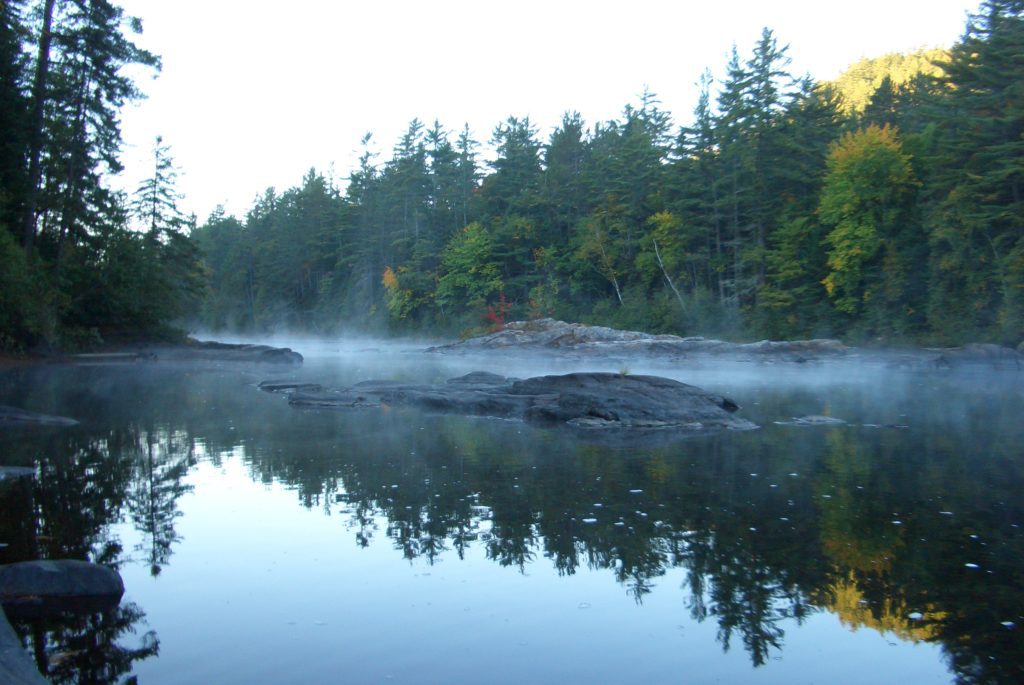



If you’ve ever hiked through the Nashville Conservation Reserve just north of Kleinburg, you know exactly why it must be protected. This 900-hectare ecological reserve near Kirby and Huntington Roads is not just a pretty patch of green, it is the last contiguous Greenbelt forest in Vaughan. The Nashville Conservation Reserve is a living ecological corridor home to key species including the Redside Dace (an endangered minnow), the Rapids Clubtail (an endangered dragonfly) and the largest remaining population of the Western Chorus Frog (a threatened species) in the province. The conservation reserve is also in the headwaters of the Humber River, and connects communities to nature in one of Canada’s fastest-growing regions. It was protected for a reason.

That’s why the province’s plans for the Nashville Conservation Reserve are so alarming.
A Highway of Devastation Through the Heart of It
The Ontario government wants to drive a 59-kilometre 10-lane highway directly through the Nashville Conservation Reserve. According to the Toronto and Region Conservation Authority (TRCA), the chosen route for Highway 413 will impact approximately 500 metres of the Humber River, cut across the area’s largest floodplain, threaten numerous species at risk, and destroy a recently restored trail system that residents and conservation workers spent years building. This is not a minor inconvenience. This is irreversible ecological destruction.

The Route That Didn’t Have to Be
Internal provincial documents obtained by the Toronto Star reveal that the government’s own consultants, firms Aecom and WSP, identified a technically preferred route called S8-3. That route had fewer impacts on the Nashville Conservation Reserve and the Greenbelt, crossed a more stable section of the Humber River, and would have been cheaper to build. The TRCA also concluded that S8-3 “appears to have the fewest impacts and is preferred.”
The government’s own experts warned that abandoning S8-3 would “maximize incursions into the Greenbelt” and “undermine the credibility of the entire route selection process.” The Ontario government ignored them. Instead they chose the worse route (S8-5) which will devastate the Nashville Conservation Reserve.
So Why the Change?
The answer appears to involve developer-connected land in North Kleinburg. The preferred route, S8-3, would have cut through a future subdivision tied to the North Kleinburg-Nashville Secondary Plan, land owned by well-connected developers. When the province shifted to S8-5, that land was spared.
Shortly after the route was announced, one parcel was listed for sale with the highway’s absence marketed as a selling feature. It was sold to Argo Kleinburg Ltd. in January 2021 for $112 million — up from $75 million just three years earlier. Argo Developments is among eight developers identified as owning significant land along the 413 corridor.
York University professor Mark Winfield put it plainly: “Are these decisions being thought through, or is this being done to accommodate particular interests that have connections to the government?”
The Implications Are Clear
When a government ignores its own experts, overrules conservation authorities, and chooses a route that benefits connected developers at the expense of protected lands, the public deserves answers. The Nashville Conservation Reserve exists because this land is too valuable — ecologically and for future generations — to be sacrificed to asphalt.
But this fight isn’t over. Public pressure works — and it’s not too late to stop Highway 413. Tell your MPP and the Minister of Transportation that Highway 413 should be cancelled!