
ENVIRONMENTAL DEFENCE, CANADIAN ASSOCIATION OF PHYSICIANS FOR THE ENVIRONMENT, DAVID SUZUKI FOUNDATION, ECOJUSTICE, GREENPEACE CANADA, OCEANA CANADA
OTTAWA/TRADITIONAL, UNCEDED TERRITORY OF THE ALGONQUIN ANISHNAABEG PEOPLE – A coalition of health and environmental groups are celebrating a court victory that protects the federal government’s ability to regulate plastic pollution.
In its ruling, the Federal Court of Appeal affirmed that the government acted lawfully when it designated plastic manufactured items as ‘toxic’ under Schedule 1 of the Canadian Environmental Protection Act (CEPA). The groups are continuing to review today’s decision.
The Canadian Association of Physicians for the Environment, David Suzuki Foundation, Environmental Defence Canada, Greenpeace Canada, and Oceana Canada appeared as interveners in support of the Canadian government’s efforts to fend off the industry-led attempt to overturn the listing. The groups were represented by lawyers from Ecojustice.
In its ruling the Federal Court of Appeal affirmed:
- That it was well within the federal government’s authority to list plastic manufactured items as toxic under CEPA.
- That plastic manufactured items can be properly categorized as a substance under CEPA.
- That there is sufficient evidence that plastic manufactured items have caused, or could cause harm, in line with CEPA’s precautionary principle.
The CEPA listing gives the federal government the critical tools it needs to make regulations to prevent and control plastic pollution at every stage of the substance’s life cycle, from research and development to manufacturing, use, storage, transportation and final disposal or recycling.
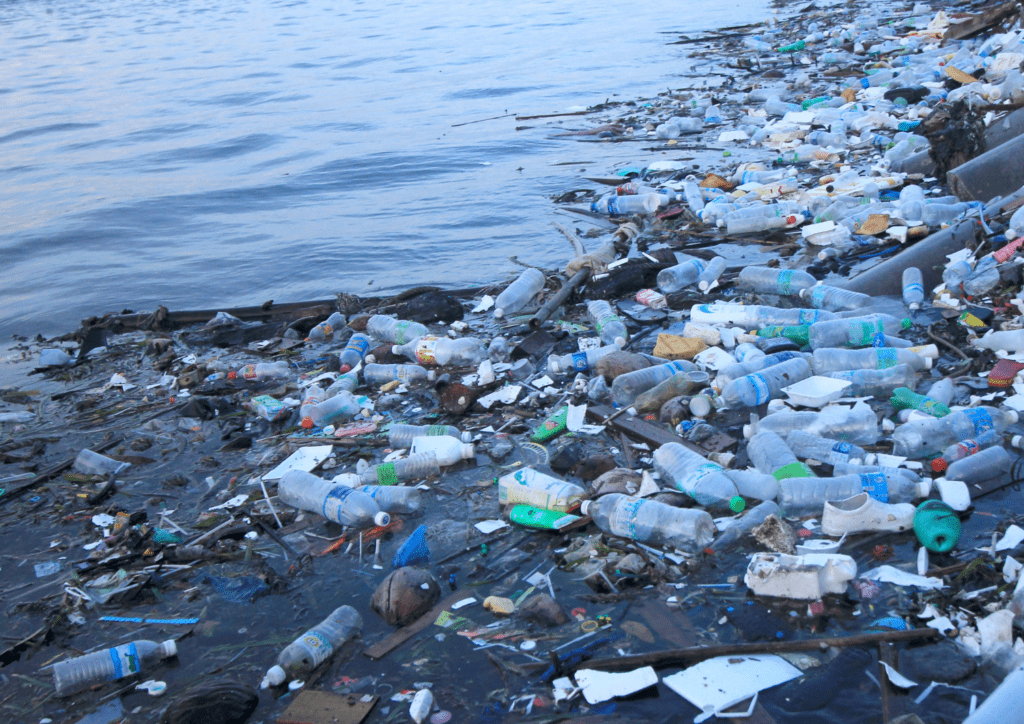
Plastic is one of the most persistent pollutants on Earth — scientific studies have detected microplastics in human blood, while microplastic particles have been found in human lungs, intestines, and even the placentas of fetuses and in newborns.
Lindsay Beck, lawyer, Ecojustice said:
“From production to end-of-life, plastic is a ubiquitous and persistent pollutant that threatens the environment and burdens our economy. In today’s ruling, the Federal Court of Appeal recognized that listing “plastic manufactured items” as toxic under CEPA is entirely in line with the law’s purposes of preventing pollution and protecting Canada’s biodiversity. We are pleased to see the Court embrace a robust and purposive interpretation of the statute that allows Canada to address emerging environmental harms and act in a precautionary manner.
“Today’s important victory protects a critical tool in the government’s toolkit to curb plastic pollution and ensure that harms from plastics in the environment are effectively mitigated.”
Jane McArthur, Toxics Program Director, Canadian Association of Physicians for the Environment (CAPE) said:
“This decision is critical for protecting public health. Physicians see firsthand the harms of plastic on people’s health. Plastic chemicals are linked to serious health issues from cancers to reproductive harms, heart disease to immune system problems. A recent Abacus Data polling commissioned by Oceana Canada reveals people in Canada want government to take a more precautionary approach to plastics. By upholding listing plastic as toxic under the Canadian Environmental Protection Act (CEPA), the Court has preserved a vital tool that respects our right to a healthy environment and can help prevent harmful exposures stemming from the life cycle of plastics.”
Karen Wirsig, Senior Program Manager, Plastics, Environmental Defence Canada, said:
“This ruling ends years of frustrating legal delay tactics by the plastics industry that blocked crucial federal action on plastic pollution, resulting in more and more plastic accumulating in the environment and entering our bodies. With the court on its side, the federal government must move swiftly to further protect people and the environment from plastic. Canada’s next step should be to strengthen and expand the bans on harmful and unnecessary single-use plastics while supporting a shift to reusable and refillable packaging.”
Anthony Merante, Senior Plastics Campaigner, Oceana Canada said:
“Today’s decision is a major win for ocean protection and for Canadians. By upholding the federal government’s authority to regulate plastics, the court has affirmed that science-based action to reduce plastic pollution is both legal and necessary. New research released by Oceana Canada shows overwhelming public support for strong federal action on single-use plastics, and this ruling clears the way for Canada to move forward with practical measures — including regulations on labelling, recycled content, and single-use plastic packaging in grocery stores — that protect oceans, wildlife, and human health, and reaffirms Canada’s role as a global leader in the fight against plastic pollution.”
Priyanka Vittal, Legal Counsel, Greenpeace Canada said:
“The overwhelming majority of people in Canada support the ban and bold action on plastic pollution. This ruling must breathe new life into the government’s approach to plastics by expanding the ban, investing in a transition to non-toxic, reuse-based systems, and championing a strong Global Plastics Treaty that reduces the production and consumption of plastics on a scale that matches the scope of the crisis.“
Lisa Gue, National Policy Manager, David Suzuki Foundation said:
“This decision sets the stage for Canada to take the bold action needed to tackle plastics and other toxic pollution at source. Canada’s iconic natural spaces are under threat from the scourge of plastic pollution. Plastic is toxic and so is Canada’s relationship with it. It’s time to break up with plastics — to protect the health of the environment and everyone who depends on it.”
About
Ecojustice uses the power of the law to defend nature, combat climate change and fight for a healthy environment. Its strategic, public interest lawsuits and advocacy lead to precedent-setting court decisions, law and policy that deliver lasting solutions to Canada’s most urgent environmental problems. As Canada’s largest environmental law charity, Ecojustice operates offices in Vancouver, Calgary, Toronto, Ottawa and Halifax.
Oceana Canada was established as an independent charity in 2015 and is part of the largest international advocacy group dedicated solely to ocean conservation. Oceana Canada has successfully campaigned to ban single-use plastics, end the shark fin trade, make rebuilding depleted fish populations the law, improve the way fisheries are managed and protect marine habitat. We work with civil society, academics, fishers, Indigenous Peoples and governments to return Canada’s formerly vibrant oceans to health and abundance. By restoring Canada’s oceans, we can strengthen our communities, reap greater economic and nutritional benefits, and protect our future. Find out more at Oceana.ca.
The David Suzuki Foundation (DavidSuzuki.org | @DavidSuzukiFdn) is a Canadian environmental non-profit organization, founded in 1990. We operate in English and French, with offices in Vancouver, Toronto and Montreal. We aim to collaborate with many different people in Canada, including Indigenous leadership and communities, all governments, businesses and individuals to find solutions to create a sustainable Canada through scientific research, traditional ecological knowledge, innovative policy and legal solutions, communications and public engagement. Our mission is to protect nature’s diversity and the wellbeing of all life, now and for the future. We envision a world where we all act every day on the understanding that we are interdependent with nature, and with each other.
Environmental Defence (environmentaldefence.ca): Environmental Defence is a leading Canadian environmental advocacy organization that works with government, industry and individuals to defend clean water, a safe climate and healthy communities.
The Canadian Association of Physicians for the Environment (CAPE) is a physician-directed non-profit organization working to secure human health by protecting the planet. Since its founding in 1994, CAPE’s work has achieved substantial policy victories in collaboration with many partners in the environmental and health movements. From coast to coast to coast, the organization operates throughout the country with regional committees active in most provinces and all territories. cape.ca
– 30 –
For more information or to request an interview, please contact:
Venetia Jones, Associate director of strategic communications, Ecojustice
vjones@ecojustice.ca
Mira Merchant, Communications Manager, Environmental Defence Canada
media@environmentaldefence.ca
Vaishali Dassani, Communications and Media Manager, Oceana Canada
vdassani@oceana.ca
Priyanka Vittal, Legal Counsel, Greenpeace Canada
lpvittal@greenpeace.org
Rosie Rattray, Communications Specialist, David Suzuki Foundation
rrattray@davidsuzuki.org
Loujain Kurdi, Communications Manager, Canadian Association of Physicians for the Environment (CAPE)
media@cape.ca