ENVIRONMENTAL DEFENCE, ONTARIO NATURE, ECOJUSTICE
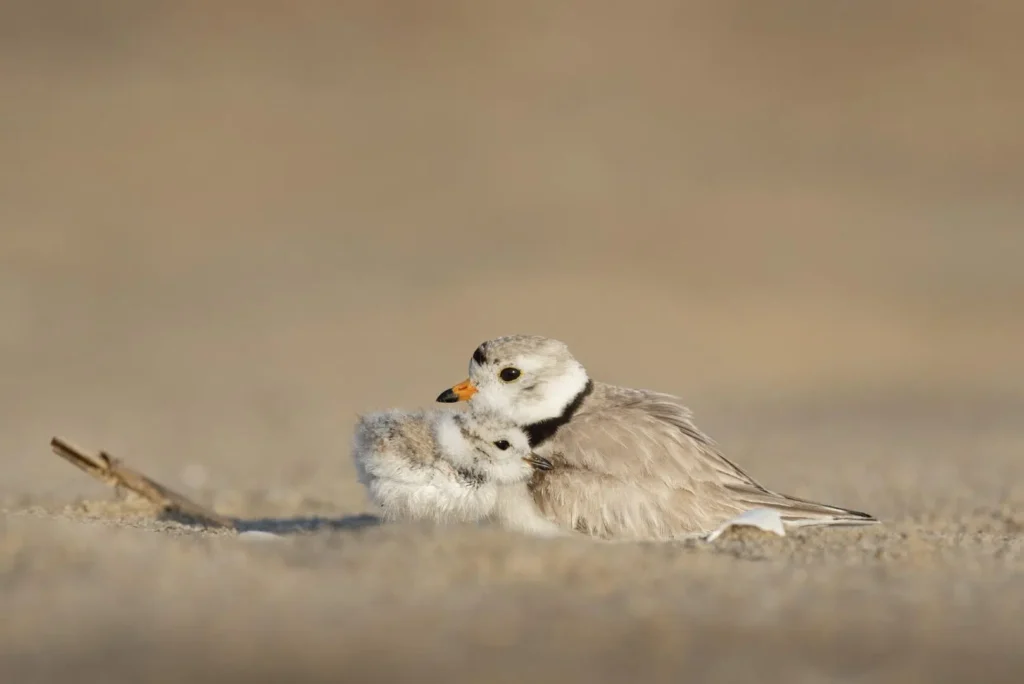
Toronto | Treaty Lands and Territory of the Mississaugas of the Credit First Nation, and the traditional territory of the Anishinaabeg, the Haudenosaunee, and the Wendat – A new report from Environment and Climate Change Canada (ECCC) has determined that the endangered Piping Plover is under an “imminent threat to its recovery” because the Ontario government has “removed provincial protection for Piping Plover habitat” at Wasaga Beach. This means the federal Environment Minister “must recommend an emergency order… for the protection of the species” and that Canada’s federal cabinet has no legitimate alternative except to issue that order.
ECCC has determined that beach management now poses the most extreme and imminent threat. Contrary to the Town’s assurances, the report finds that even its Beach By-law’s general restrictions on “motorized vehicle use, fires and fireworks, littering, tents/camping, barbequing, pets, and damage to natural features” do not apply to Town employees, contractors or to any person the Town chooses to exempt. As a consequence, for example, mechanical raking can and has already occurred within known Piping Plover habitat.
The Ministry has also determined that “the threats associated with the [Town’s] proposed development projects (i.e. enhanced boardwalk, amusement deck, eco-resort, amphitheatre, glamping facility, and marina with pedestrian bridge)… have a high potential severity” and would make the Piping Plover’s recovery “highly unlikely” if implemented as planned. While construction is not yet “imminent” enough to make proactive intervention mandatory “at this time”, the report makes clear they could also trigger the Minister’s obligation “in the future.”
With this report, the Government of Canada has explicitly confirmed what experts have been saying for more than a year: “the recovery of the Piping Plover… is highly unlikely without immediate intervention to address the new and intensifying threats at Wasaga Beach”. That admission, and the protection that must follow, is good news for the Piping Plover, but it should have come automatically and immediately. Instead, it has come only after a formal petition, months of pressure from thousands of concerned Canadians and an application for judicial review. After this extended delay, it is vital that the Minister and Cabinet swiftly bring into force comprehensive federal Species at Risk Act protection for Piping Plover habitat at Wasaga Beach.
Andrew Cleland, lawyer, Ecojustice: “While the Minister’s acknowledgement that Piping Plovers face imminent threats is an important first step, the months-long delay points to a systemic issue with the federal government’s failure to take urgent action to protect endangered species, as required by law. Emergency orders are vital legal tools that Parliament designed to protect endangered species and the critical habitat that they need to survive and recover. But they only work if the government swiftly steps up to implement its at-risk species laws. We urge Cabinet to accept the Minister’s recommendation and give this species on the brink of disappearing the protection it urgently needs.”
Tony Morris, conservation policy and campaigns director, Ontario Nature: “Wasaga Beach is the most significant habitat for Piping Plover in Ontario. In the absence of provincial protections, the federal government must act to ensure the survival and recovery of this species.”
Phil Pothen, Ontario environment program manager and counsel, Environmental Defence Canada: “This opinion leaves Cabinet with no defensible course except to issue an Emergency Order for Wasaga’s Piping Plover habitat. We urge them to make that order comprehensive, to issue it very quickly, and to act more proactively in future. It should not take a formal petition, litigation, and months of public pressure to trigger a response that’s so vital to a species’ recovery, let alone one which the law already mandates.”
Background
- In January 2026, the groups petitioned the Minister of the Environment for emergency protections under Canada’s Species at Risk Act. The Minister failed to recommend those emergency protections.
- In April 2026, Ecojustice, on behalf of Environmental Defence and Ontario Nature, filed a judicial review application, followed by an urgent injunction motion in July 2026. After the injunction was filed, the Town of Wasaga Beach gave the Court a legally enforceable undertaking to avoid specified damaging activities in the critical habitat through October 31, 2026.
- Since the species returned to Ontario in 2007 after a 30-year absence, the same year Ontario’s updated Endangered Species Act was enacted, Wasaga Beach has become the province’s most important nesting site. Approximately 70 per cent of the Ontario-fledged Piping Plovers that have survived to adulthood originated from this stretch of shoreline.
ABOUT ENVIRONMENTAL DEFENCE (environmentaldefence.ca): Environmental Defence is a leading Canadian environmental advocacy organization that works with government, industry and individuals to defend clean water, a safe climate and healthy communities.
ABOUT ONTARIO NATURE (ontarionature.org): Ontario Nature protects wild species and wild spaces through conservation, education and public engagement. A charitable organization, Ontario Nature represents 9,500 members, 130,000 supporters and 160 member groups from across Ontario.
ABOUT ECOJUSTICE (ecojustice.ca): Ecojustice uses the power of the law to defend nature, combat climate change and fight for a healthy environment. Its strategic, public interest lawsuits and advocacy lead to precedent-setting court decisions, law and policy that deliver lasting solutions to Canada’s most urgent environmental problems. As Canada’s largest environmental law charity, Ecojustice operates offices in Vancouver, Calgary, Toronto, Ottawa and Halifax.
Media contacts:
Carolyn Townend, Environmental Defence Canada
media@environmentaldefence.ca
John Hassell, Ontario Nature
johnh@ontarionature.org
Venetia Jones, Ecojustice
vjones@ecojustice.ca