



This blog was updated in December of 2025. The orginal version was authored by Nate Wallace.
After you finish reading, click here to read part 2!
Introduction: Why this matters now
The federal government’s pause of the Electric Vehicle Availability Standard (EVAS) comes at a time when Canadians are facing the highest vehicle emissions and some of the worst EV supply shortages in the world. While EV demand keeps rising, automakers continue pushing EVS to the luxury market—leaving Canadian consumers with limited choices, long waitlists, and higher prices.
A strong EVAS is the single most important tool to fix these problems. It would require automakers to increase the share of EVs they make available in Canada, helping ensure that cleaner, cheaper-to-operate vehicles are accessible to everyone—not just people who can afford premium models or who live in provinces with existing EV policies. It would also drive investment in charging infrastructure, boost domestic manufacturing, and help Canada meet its climate targets.
With EV supply, affordability, and infrastructure at stake, this moment matters. Below are detailed answers to the most common questions and misconceptions about electric vehicles, and why Canada needs a strong EVAS without delay.
Are EVs actually better for the environment?
When you look at emissions across a vehicle’s entire lifecycle (manufacturing, driving, and disposal), gas cars emit roughly 80 per cent more greenhouse gases than EVs. This holds true in every Canadian province, even those that still rely partly on fossil fuels for their electricity grids.
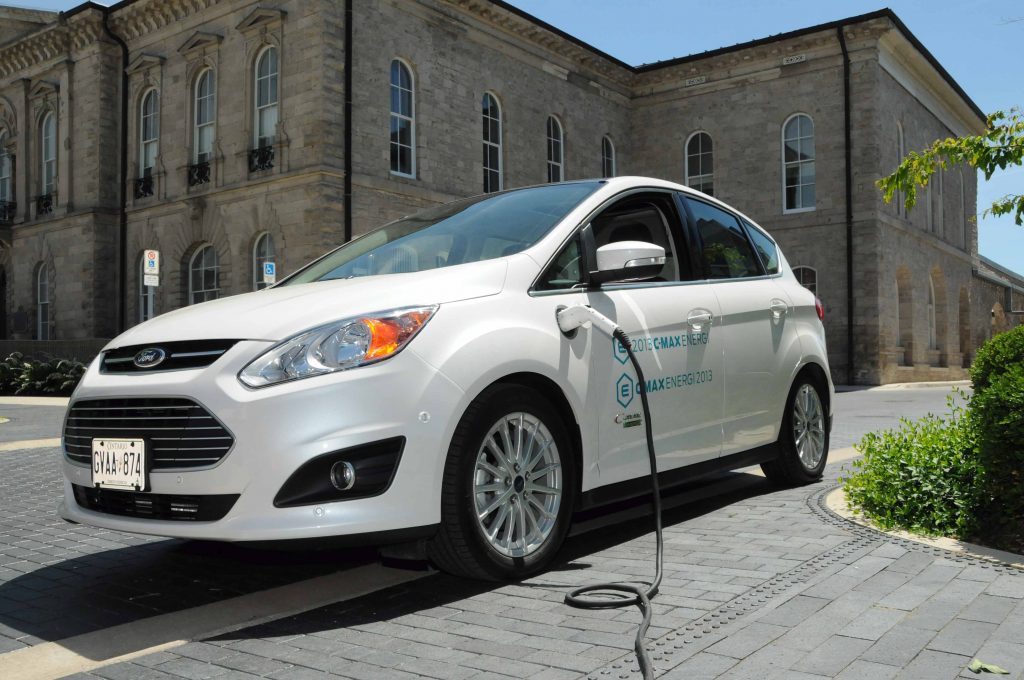
It’s true that battery production generates more emissions up front than producing a gas car. About half of these emissions come from the energy-intensive production of metals and battery materials, and the other half is due to the electricity mix in manufacturing countries, many of which use coal. But the key difference is what happens after manufacturing: a gas vehicle continues to emit carbon every kilometre it drives, an EV does not. As the grid gets cleaner so does its electricity. The total life cycle emissions for an EV over about 15 years is 13 tonnes versus 80 tonnes for an Internal combustion engine (ICE) car.
Beyond climate impacts, EVs also eliminate tailpipe emissions that contribute to smog, respiratory illnesses, cardiovascular disease, and cancer. These health benefits are especially important in dense urban areas and near major roads or highways where air pollution disproportionately harms low-income and racialized communities.
As Canada moves toward a near-zero-emission grid by 2035, EVs will only become cleaner over time, while gas vehicles will continue to emit carbon and toxic pollutants throughout their lifetime.
Can Canada’s electricity grid handle the transition to EVs?
Yes, and strengthening the grid is already underway. Canada has one of the cleanest and most reliable grids in the world, with roughly 86% of its electricity generated from non-emitting sources.
The idea that EVs will overwhelm the grid is a myth. In reality, EV charging demand grows gradually as adoption increases, giving utilities years, not weeks, to prepare. Studies show that even if every passenger vehicle in Canada were electric, national electricity demand would rise by only around 15%, a level that can be met through planned grid expansion and efficiency improvements.
Charging EVs overnight or during off-peak hours, actually strengthens grid stability. Already, utilities are investing in tools that discourage peak-time charging and make better use of existing infrastructure.

Environmental Defence strongly supports Clean Electricity Regulations to ensure Canada continues shifting to a non-emitting grid by 2035. Decarbonizing the grid goes hand-in-hand with electrifying transportation, and Canada is well-positioned to achieve both.
Do EVs work in cold Canadian winters?
Yes. EVs operate reliably in cold weather, and their performance improves every year. All vehicles; gas or electric, are affected by extreme cold, but the impacts on EVs are often overstated.
EVs may temporarily lose 20 to 35 percent of their range in very cold weather because energy is used to heat the cabin, but gas cars also perform worse in winter due to reduced fuel economy, thicker oil, and longer warm-up times. EVs offer useful advantages in cold conditions because they can be preheated while still plugged in, which preserves battery range and improves comfort. Their batteries also stay warmer than the surrounding air thanks to onboard thermal management systems, which helps maintain performance in low temperatures.
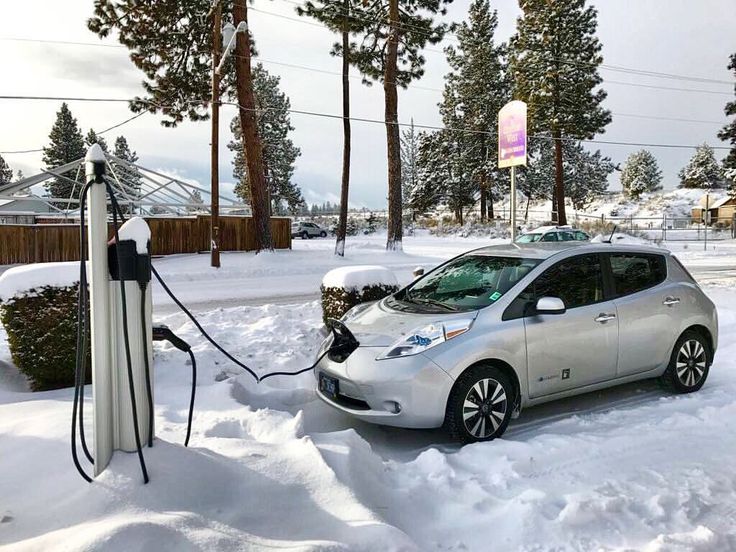
Canadians are already driving EVs in the coldest parts of the country, and vehicles are tested in conditions far harsher than typical winter temperatures. A Nissan Ariya even completed a North Pole expedition, demonstrating extreme cold capability.
Most importantly, surveys show that EV drivers do not report winter performance as a barrier once they own the vehicle. In a nationwide poll, 97% of Canadian EV drivers said their next vehicle would also be electric, the strongest endorsement possible.
Does the EVAS force people to drive electric cars? Shouldn’t they be able to drive what they want?
The EV Availability Standard does not force anyone to drive an electric vehicle. It does not ban gasoline cars, prevent people from buying them, or regulate what individuals can or cannot drive. What it does do is require automakers to make electric vehicles available in Canada so that people who want an EV can actually find one at a reasonable price. Right now, Canadians face long waitlists, limited model choices, and inflated prices because automakers prioritize selling EVs in places with stronger regulations. The EVAS simply corrects that imbalance and ensures that Canadians have access to the same vehicles available in other countries.
People who still prefer gasoline vehicles will continue to have that choice for many years. The EVAS increases EV supply gradually, aligning with the natural pace of the auto market, the turnover of vehicle fleets, and improvements in charging infrastructure. It does not require anyone to get rid of their existing car or replace it before they are ready. What it changes is the behaviour of car companies, not consumers.
The concern that the EVAS limits choice is actually the opposite of what happens in practice. Today, many Canadians do not have the option of buying an affordable EV even if they want one. A strong EVAS expands consumer choice by ensuring automakers bring more models, more price points, and more inventory into the Canadian market. It also encourages competition, which helps drive prices down over time. Without the EVAS, car companies have little incentive to sell EVs here and will continue flooding the market with large, high-emission trucks and SUVs, which already make up about eight out of ten new vehicles sold.
Ultimately, the EVAS is about giving Canadians more options, not fewer. It allows people who rely on cars to choose cleaner, cheaper-to-operate vehicles if they want them, while Canada continues investing in public transit, walkable communities, and active transportation so that more people can choose to drive less in the future. The policy does not take choices away from drivers; it ensures that they finally have real ones.
Are EVs practical in rural and remote communities?
Rural commutes are generally shorter than many people assume. According to the Rural Ontario Institute’s 2025 Commuting Factsheet, most rural residents travel between 15 and 30 km each way, well within the range of even the most affordable electric vehicles. Long daily routes do exist in specific industries or regions, but they are the exception, not the norm. In fact, research consistently shows that routine rural driving patterns are usually easier on EV batteries because speeds are steadier and there’s less stop-and-go congestion.
The idea that EVs can’t work in rural areas is also contradicted by what rural communities in the U.S. and Canada are already demonstrating. The U.S. Department of Transportation’s Rural EV Toolkit notes that rural drivers benefit more from EVs’ huge fuel and maintenance savings because they tend to drive longer annual distances. Over a vehicle’s lifetime, those savings can add up to thousands of dollars. Similar findings appear in the Electrification Coalition’s work, which shows that EV adoption in rural areas grows fastest once basic charging coverage is in place.
And crucially, rural charging networks are expanding. CBC recently reported on several Canadian rural regions actively building community charging hubs, seeing EV infrastructure as a way to attract tourism, support local economies, and reduce energy costs. These projects aren’t speculative; they’re happening because rural residents want reliable transportation options that cost less to operate.
Finally, Canada’s Electric Vehicle Availability Standard (EVAS) will directly accelerate charging deployment in rural areas. The standard requires automakers to steadily increase the share of EVs they supply to the Canadian market, ending the longstanding shortage outside B.C. and Quebec. Once EV supply becomes predictable and guaranteed, utilities, municipalities, and private charging companies gain the certainty needed to invest in more charging stations in rural and small communities. The EVAS also allows manufacturers to earn compliance credits by investing in charging infrastructure, a mechanism designed specifically to boost installations where gaps remain, including rural corridors and smaller towns.
So while it’s true that some rural communities still face infrastructure challenges, the broader narrative that “EVs don’t work in rural areas” is a myth. Rural driving distances are usually well within EV range, infrastructure is expanding rapidly, and federal policy is designed to ensure rural Canada doesn’t get left behind. With EVAS in place, rural communities stand to benefit from more vehicle availability, more charging investment, and much lower operating costs for households and small businesses alike.
Won’t an EV standard force auto production to the US, especially given US tariffs?
According to research done by Electric Mobility Canada, only about 15 % of EV models available in Canada are affected by these measures, with most vehicles assembled in Europe or Asia, or exempt due to domestic production.
This indicates that trade frictions have not significantly impeded EV availability or the job growth potential associated with a strong EVAS.
Further reinforcing this point, research commissioned by our organizations and led by Professor Jonn Axsen of Simon Fraser University identifies a robust EVAS as the single most effective tool to ensure a stable EV supply and accelerate market transformation. Complementary modelling by Dunsky supports this conclusion, underscoring that strong policy signals drive both investment and innovation.
Canada should resist pressure from industry actors using trade disputes as a pretext to weaken EV standards. The tariffs in question were designed to protect U.S. manufacturers, not Canadian jobs.
Rather than yielding to these protectionist narratives, Canada should capitalize on this moment to strengthen its leadership in electrification, building resilient domestic supply chains, attracting clean-tech investment, and securing high-quality, future-proof employment. Far from being a burden, a strong EVAS is the cornerstone of Canada’s competitiveness in the global clean economy.
Are plug-in hybrids (PHEVs) a good solution?
PHEVs are often marketed as a “best of both worlds” option, but new real-world data shows they are far less clean than advertised. Their climate benefit depends entirely on how often drivers plug them in.
Recent research shows that real-world emissions from PHEVs can be three to five times higher than laboratory estimates because drivers rely on the gasoline engine far more than expected. Many models have small batteries, so once the charge is depleted they operate like heavy gasoline vehicles and can even pollute more than efficient gas cars. Data from Europe and North America also shows that the share of kilometres driven in electric-only mode is often far lower than assumed in testing, which further reduces the environmental benefits of PHEVs.
PHEVs can help drivers in regions with limited charging but they should only be treated as transitional, not a long-term solution and they should not be considered equivalent to zero-emission vehicles.