

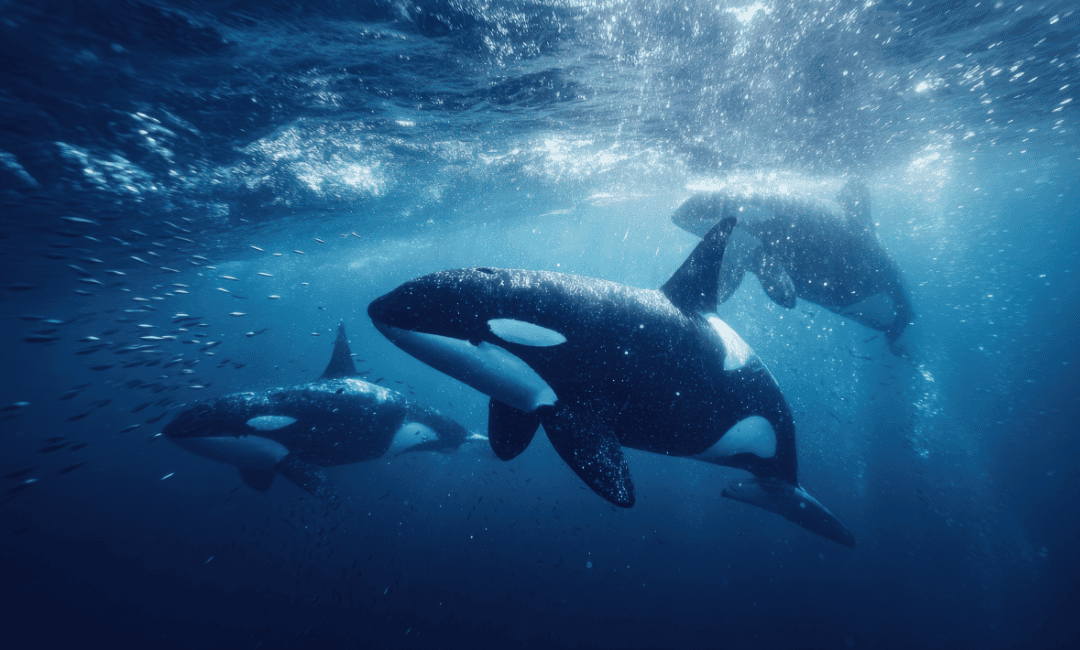

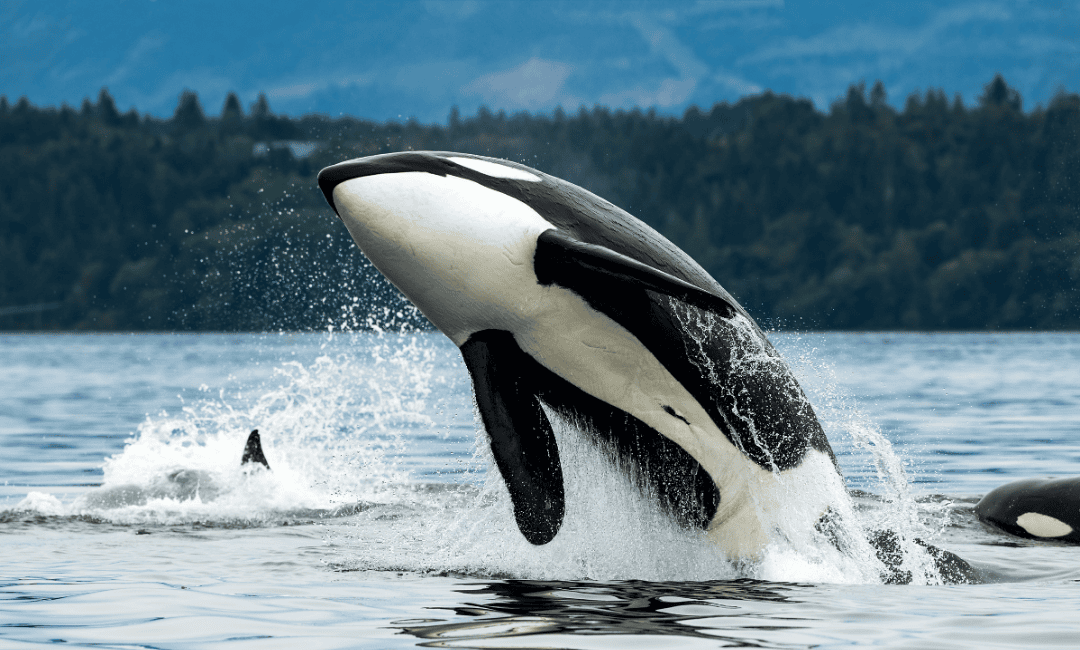
The killer whale, also known as the orca, is one of the most well-known and beloved animals on the West Coast. One of the most thrilling things to behold is the sight of an orca breaching.
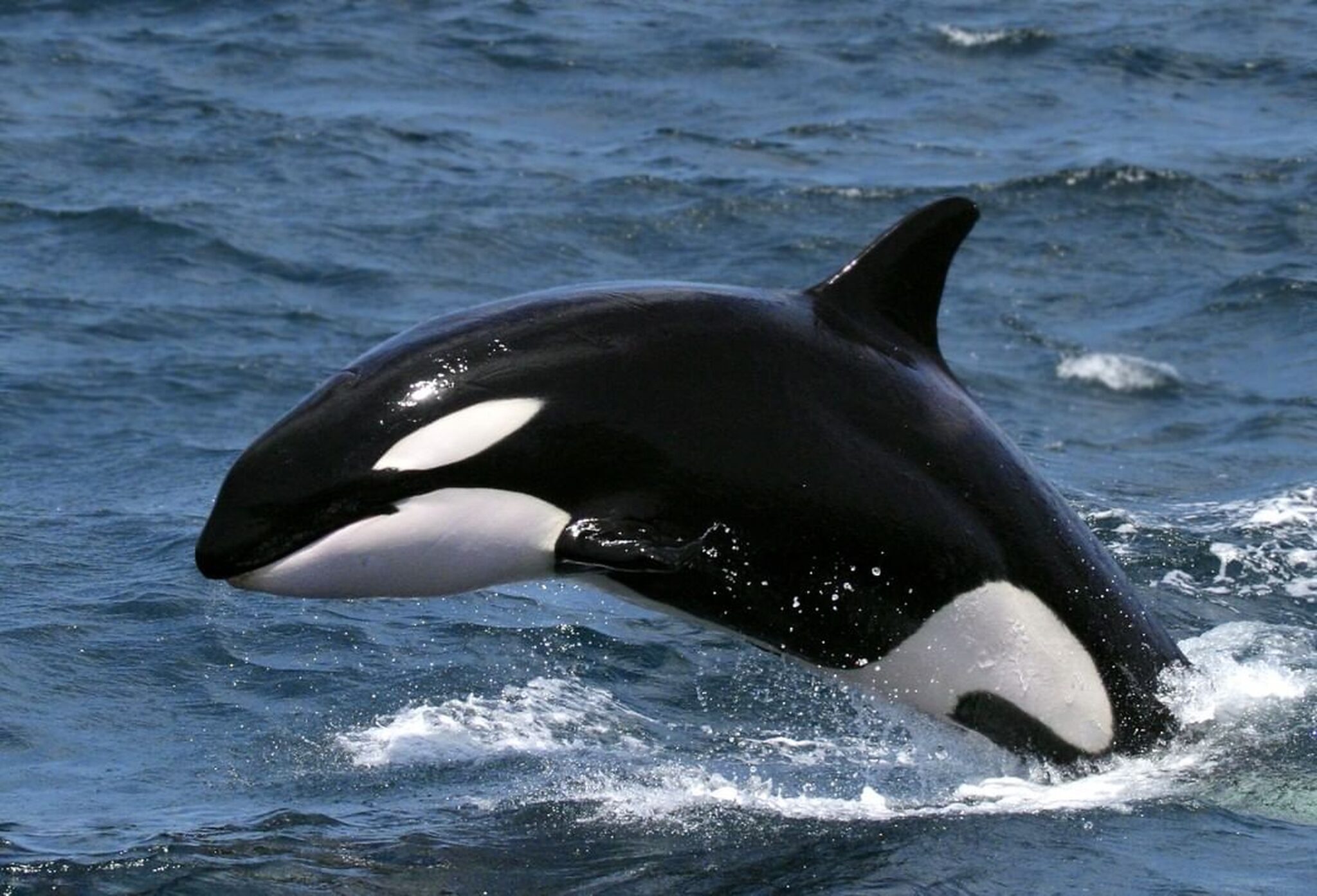
Orcas are complex social beings with culture and language of their own.
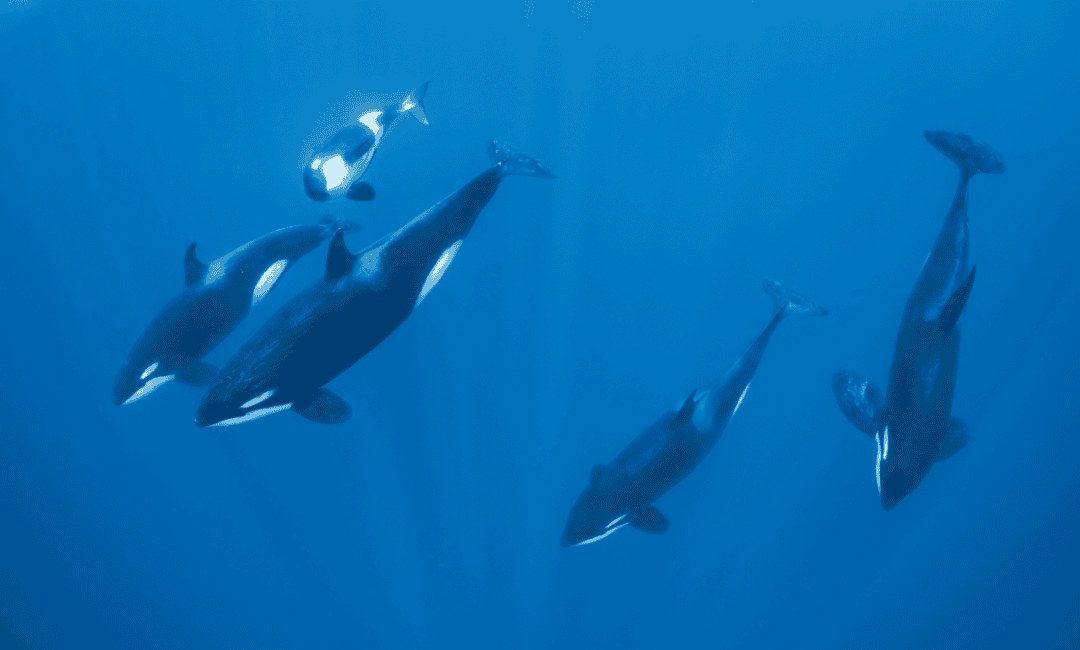
They live in matriarchal communities. Like humans, orcas are incredibly social with close knit bonds. The mother nurses the calf for three years after carrying it for 18 months — and then the two are part of the same family for the rest of their long lives (they can live for up to 100 years).
The Southern Resident Killer Whales are a genetically and culturally distinct group of orcas that frequent the Salish Sea near Vancouver Island and Metro Vancouver. There are three distinct pods of Southern Resident killer whales known as J, K, and L pods.
We’ve come to know and love the Southern Resident Orca
Remember the salmon hat trend that occasionally pops up within the pod? This bizarre behaviour where individuals balanced dead salmon on their heads like hats left scientists scratching their heads — but some chalk it up to their playful nature.
We’ve also grieved with these orcas, like when a mother famously carried the new born calf she tragically lost for 17 days in 2018, covering more than 1,600 kilometres of the sea in what scientists called “a tour of grief.” The same mother sadly carried another lost calf just last year.
As scientists with Raincoast Conservation Foundation so eloquently describe: “The loss of this population would mean more than the disappearance of 75 killer whales. It would mark the extinction of the population’s culture, a way of life passed down through generations.”
Southern Resident Killer Whales are also culturally significant to west coast First Nations. Orcas are known to some Indigenous communities as the guardians of the sea. To some people, orcas represent the strength of love and the bonds of family because of their strong group behaviour. For example, for the W̱SÁNEĆ People, orcas are considered as family and protectors of their people.
Today, only 75 of these endangered animals remain
Southern resident killer whales were listed as endangered in 2003. For years, pressures on these icons of the Pacific coast have been increasing.
Their survival is increasingly uncertain, due to a multitude of threats, including:
- Fewer and smaller Chinook salmon (these orcas’ main food source)
- Habitat disturbance
- Fatal vessel strikes
- Pollution, including toxic contaminants in the water
- Underwater noise from vessels, which makes it difficult for orcas to use sound to hunt, navigate, find mates and communicate.
Prime Minister Carney is choosing extinction
The Prime Minister’s extinction agenda will push these animals closer to extinction. Especially his plans for a new oil pipeline, more LNG and an expansion of a large port in Vancouver.
The Trans Mountain Pipeline Expansion (TMX) has already brought increased oil tanker traffic and further underwater noise pollution. But now, PM Carney wants to build a new pipeline. That pipeline combined with more LNG terminals will mean more vessel traffic. It also means more exposure to contaminants and risks to the Chinook salmon which these orcas rely on for food.
Additionally, the federal government is pushing forward with the Roberts Bank Terminal 2 (RBT2) expansion, which will further increase vessel traffic in critical whale habitat, and lead to more underwater noise and destroy salmon habitat.
The Southern Resident Killer Whale, and other endangered wildlife, are protected under Canada’s Species at Risk Act (SARA). But in May, PM Carney put forward his vision for a new approach to getting major projects built, which includes allowing Cabinet to authorize projects that impact endangered wildlife by bypassing legal protections.
Environmental Defence and many others spoke up loudly against weakening SARA. Together, we proved that Canadians still care deeply about protecting wildlife. As a result of this pushback, the government’s “bulldoze nature bill” doesn’t explicitly weaken protections under SARA. But it does have a lot of concerning elements that could spell trouble for endangered wildlife. For example, it gives Cabinet the power to create “regions of national interest”, where all sorts of projects could skirt environmental laws – like SARA – entirely. And the bill does still contain some changes to SARA, allowing Cabinet to waive protections for species based on undefined feasibility considerations.

Beyond this new bill, PM Carney always had a back up plan.
The alternate option he has is to designate both the west coast pipeline as well as the port expansion under the Building Canada Act, which would also allow him to bypass the species protection law. We’ll know whether those get designated by early October.
We need to keep pushing back on this — and we need to act now. Click here to let your MP know that you want Canada to do more, not less, to protect wildlife like the Southern Resident orca.


