

Blog by Michael Adamson, Program Manager, Clean Steeland Stephen Legault, Senior Manager, Alberta Energy Transition
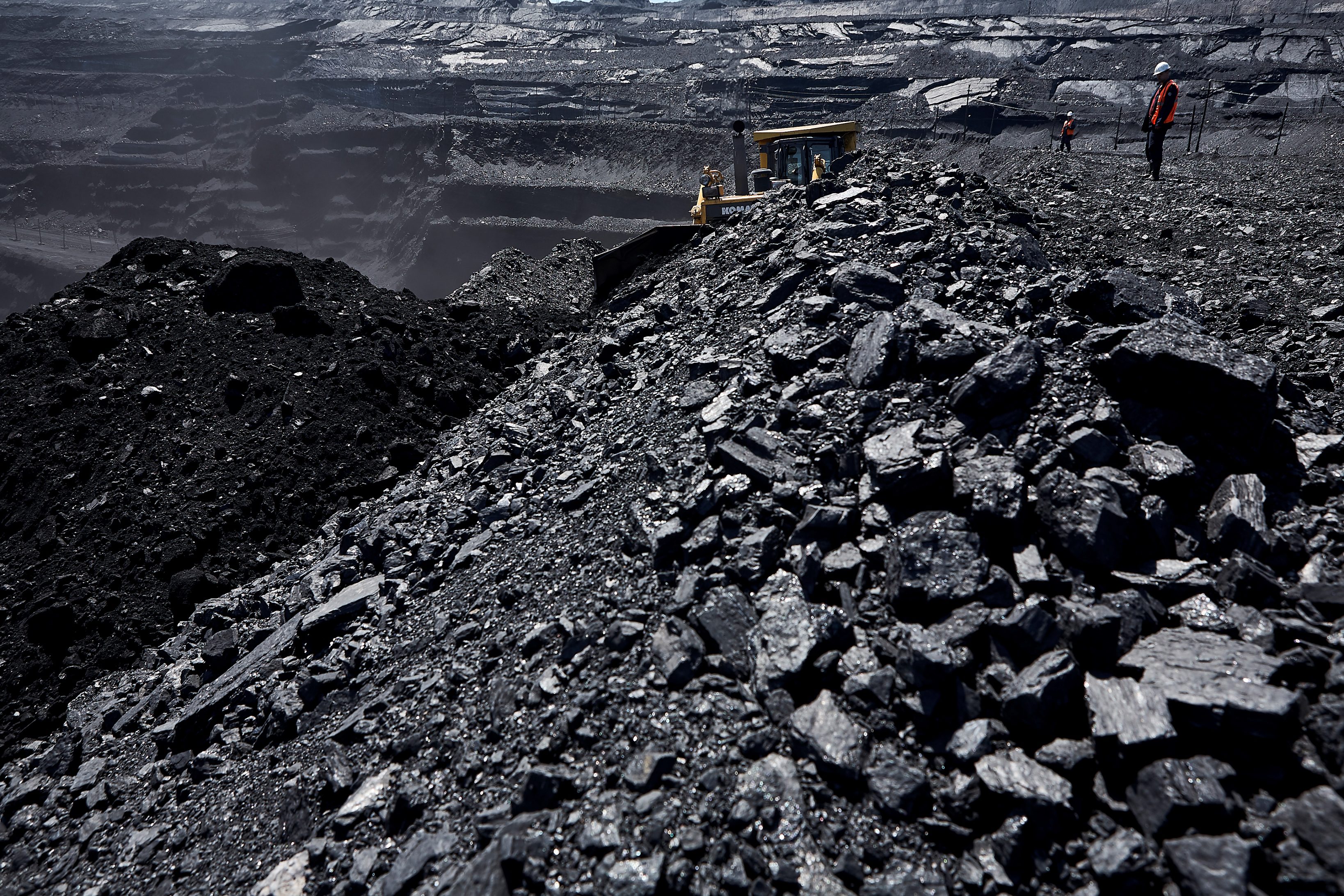
The Coal Association of Canada wants the federal government to designate metallurgical coal — the type used to make steel — as a “critical mineral” in Canada. Among the many problems with this request is that coal isn’t a mineral. It’s a rock –— a combustible organic rock formed from ancient, compacted plant matter. Minerals are inorganic, crystalline, and have a defined chemical composition. This might sound like semantic nitpicking, but the distinction matters. By definition, minerals must be inorganic.
Alberta coal contains between 60 and 80 per cent carbon, which makes it terrible for our climate when burned. Given that Canada has a few precious levers to pull to reduce our carbon footprint, keeping coal out of the atmosphere and in the ground is one of the most important things we can do.
Setting aside the fact that coal isn’t a mineral, it’s also not “critical.” Critical minerals, by definition, are scarce, hard to get at, and have applications that are also similarly specialized. That’s not the case with coal.
If the Coal Association wants to designate coal as a “critical rock,” we suppose that would be technically accurate. But that’s not what they’re after — and their push for critical mineral status reveals just how threatened this industry feels by the clean energy transition.
You Can’t Just Buy Your Way onto the Critical Minerals List
The coal industry can’t simply ask the federal government to designate something a critical mineral because they can make money mining it. Canada has clear criteria for what qualifies, and coal doesn’t meet them.
According to the federal government’s own framework, critical minerals are necessary to the “sustainable, low-carbon, and digital economy.” They must have a threatened supply chain and meet criteria focused on economic or national security. The rulebook specifically identifies minerals used for things like wind turbines, solar panels, and electric vehicles.
Yes, the coal mined in Alberta is used to make steel that could eventually go into these products — but for how much longer? We already have a critical mineral that actually meets these criteria: high-purity iron ore. First and foremost, it’s actually a mineral, not just a rock. More importantly, it’s the key ingredient needed to make steel without coal. This mineral is the basis for an energy transition that’s truly clean, with wind turbines, solar farms, and electric vehicles made from low-carbon steel.
The Real Risks Facing Coal
Let’s talk about risk — because that’s supposed to be a key factor in critical mineral designation. The main threats to the coal industry aren’t about supply chains. The real risk is that Canadians are coming to grips with the fact that coal mining is often a complete disaster for the landscapes and communities where those mines are dug. Clean water for drinking, agriculture, and wildlife should be prioritized over short-term profit-making for foreign companies.
On top of that, demand for coal is starting to diminish. According to Wood Mackenzie, while India and Southeast Asia may see some growth in the near term, demand is expected to decline in the European Union, Japan, Korea, and China. As the world moves toward lower-carbon energy, demand for coal is expected to sharply decline after 2040. The long-term reality is clear: there’s there’s less demand for coal.
This isn’t the profile of a critical mineral with a threatened supply chain. This is the profile of a sunsettingsunsetingsunsetting industry trying to secure government support before its put out to pasture.
There Are Better Options for Steelmaking
The coal industry argues that metallurgical coal is irreplaceable for steelmaking. This claim is simply wrong. We can use hydrogen to process high-purity iron ore and forge itthis iron intoit into steel in electric arc furnaces. This is a viable alternative that’s already used in regions with rich iron reserves and plentiful renewable energy.
In Sweden, the HYBRIT demonstration plant began producing the world’s first carbon-free steel in 2020, part of an initiative from the country’s leading steel, iron, and utility companies to eliminate the nation’s steel emissions. Two commercial-scale green hydrogen steel plants — Strega in Sweden and Blastr in Finland — will begin operations in 2026, producing millions of tonnes of carbon-free steel.
The industry’s claim that there is “no alternative” ignores billions of dollars in current investment and commercial-scale projects already under construction. Direct reduction infrastructure already exists at commercial scale using natural gas, and existing facilities — like ArcelorMittal’s gas-fuelled plant in Contrecoeur, Quebec — can transition to hydrogen without major relatively modest equipment modifications. In fact, ArcelorMittal’s gas-fuelled plant in Contrecoeur, Quebec successfully tested green hydrogen by blending it with gas and feeding directly into their existing facility.
The future of steelmaking is coal-free. The only question is whether Canada will lead this transition or cling to outdated technology.
Watersheds, Wildlife, and Communities at Stake
The business case isn’t the only thing working against the Coal Association’s arguments. There is no safe way to mine for coal, especially in Alberta’s headwaters. Ninety percent of the water for cities like Lethbridge, Calgary, Red Deer, and Edmonton comes from just a narrow strip of mountains comprising 10 per cent of the entire province’s footprint.. That’s exactly where new metallurgical coal mines are being proposed.
Mining in those regions will be a disaster. Selenium will poison the water, making it dangerous for fish, agriculture, and people. Those open-pit coal mines will destroy economic opportunities for tourism. And while they may employ a few hundred people, those coal mines will kill thousands of good-paying jobs in other sectors that depend on clean water and intact landscapes.
What Happens Next
We need to continue demonstrating that the future of steelmaking is coal-free and that Canada — with significant reserves of high-purity iron ore, abundant clean energy, and a skilled workforce — is uniquely positioned to lead the global transition toward clean steelmaking.
That’s why Environmental Defence is calling on Canadian steelmakers to realize their clean steel advantage and leave coal where it belongs: in the ground. We are ramping up our work in Alberta to fight to preserve our headwaters, downstream agriculture, recreation, and communities.
Maybe we need to slap a critical designation on clean water instead. It’s much more important than coal ever will be.