

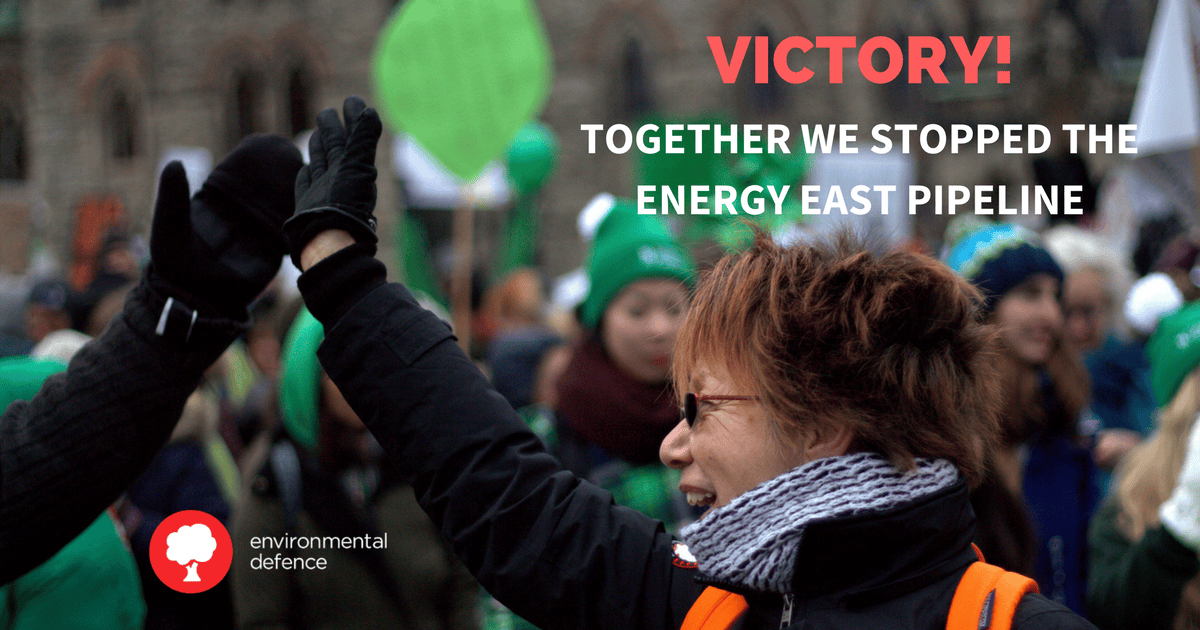

On October 5, 2017, TransCanada, the company behind Energy East, announced it was pulling the plug on its risky Energy East pipeline proposal. This is a huge victory, and good news for the climate and all Canadians who stood up for our land, water and communities.
The message from Energy East’s cancellation is loud and clear: new tar sands pipelines don’t make sense – economically or environmentally – in a world that is tackling climate change and moving away from fossil fuels. New tar sands pipelines can’t be justified during a time of low oil prices, declining investment in the tar sands, pipeline overcapacity, and an unstoppable transition to renewable energy.
Energy East was a terrible idea right from the start, and Canadians from coast to coast knew it. It put drinking water across six provinces at risk of an oil spill. It failed to respect Indigenous rights and title. It put the iconic Bay of Fundy at greater risk of a tanker spill. It faced massive opposition from communities and First Nations along the pipeline route. And it was incompatible with the Alberta emissions cap and Canada’s targets to reduce greenhouse gas emissions.
Energy East’s cancellation is a shining example of what happens when Canadians take a stand against fossil fuel expansion and demand a clean energy future. This victory wouldn’t be possible without Canadians from coast to coast defending Indigenous rights, saying no to oil spills, and saying yes to clean water and a safe climate.
It’s clearer than ever that it’s time for Canada to turn the corner on further tar sands development. Instead of pipelines, tar sands and tankers, let’s accelerate our work to build a clean economy.

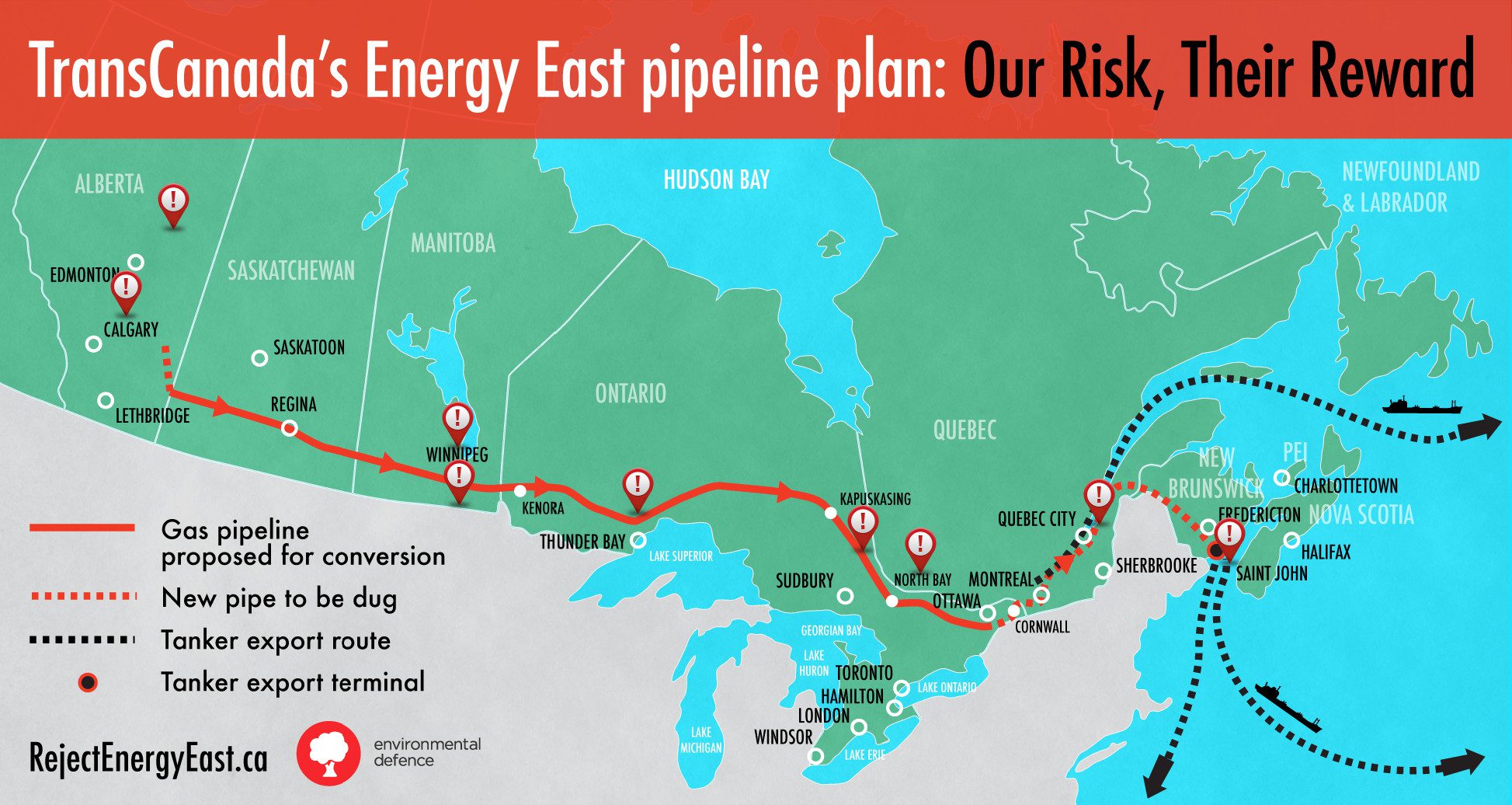
The Tar Sands
The tar sands are the fastest growing source of carbon pollution in Canada. Building massive new fossil fuel infrastructure like Energy East could further increase Canada’s climate pollution. These increases could be inconsistent with Alberta’s proposed cap on carbon pollution and Canada’s commitment at the U.N. climate summit in Paris to keep global warming below 1.5 degrees Celsius.
Hardisty, Alberta
Energy East would begin in Hardisty, Alberta, a major terminal for tar sands bitumen. Often diluted with toxic and explosive chemicals like benzene, tar sands oil is more dangerous to ship by pipeline than conventional oil. If spilled into a waterway, heavy tar sands bitumen can sink and coat river and lake bottoms, which makes it harder and more expensive to cleanup.
Kenora Region and Winnipeg
Energy East passes directly through Kenora and the Lake of the Woods watershed. It also crosses Shoal Lake, the primary source of Winnipeg’s drinking water. A spill here could impact hundreds of thousands of people, and cause significant harm to the local economy.
Otterburne, Manitoba
In January 2014, a natural gas pipeline in the same network to be converted for Energy East exploded in a massive fireball 50 km south of Winnipeg. TransCanada admits it still doesn’t know what caused the incident. This was just one of many incidents on TransCanada’s pipeline network in recent years, raising questions about the company’s safety practices.
Thunder Bay
The pipeline route runs north of Thunder Bay, creating the risk of a major tar sands oil spill into Lake Superior. The township of Nipigon is particularly vulnerable.
Temagami
Energy East would cross through Temagami, a cherished ecosystem of old-growth pine forests and pristine lakes. The region is the traditional territory of the Anishnaabe people and is home to the Temagami First Nation, one of 52 independent First Nations and Metis communties directly located along the proposed pipeline’s route.
North Bay
Energy East would threaten North Bay’s source of drinking water, Trout Lake, with the risk of tar sands oil spills. Oil spills anywhere in this region would threaten the health, environment and economy of North Bay as well as the Mattawa River system downstream.
Quebec City crossing
TransCanada wants to bury this high pressure tar sands oil pipeline under the St. Lawrence River, west of Quebec City – creating the possibility that oil could leak or rupture directly into the river.
Export Tankers:
Energy East is primarily an export pipeline. It’s estimated that 70 to 90 per cent of the pipeline’s tar sands oil would be exported unrefined on tankers, much of it to heavy oil re neries in India, Europe and the United States. Energy East would dramatically increase tanker traffic in the Bay of Fundy, which would threaten coastal ecosystems, fisheries, tourism and marine species with the risk of oil spills.
Download a PDF copy of the map here.
Videos
TransCanada’s Energy East pipeline plan is all about exporting oil. Up to 90 per cent of Energy East’s oil would be exported unrefined. As an export pipeline, it won’t create many permanent jobs or have lasting economic benefits to local communities.
Join the intrepid naturalist as he follows “the greatest” of all Canadian migrations: the journey of the tar sands.

Reports:
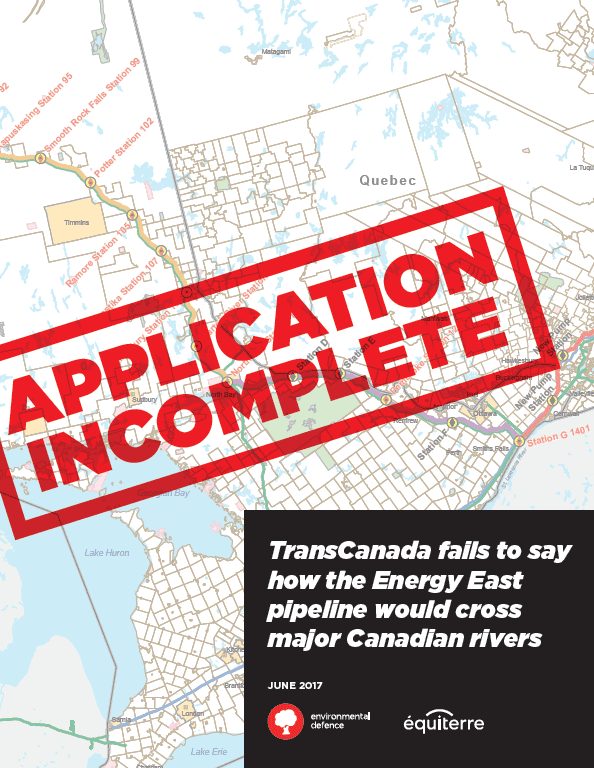
TransCanada’s application to build Energy East was missing critical details on how the proposed pipeline would cross major Canadian rivers, including the Ottawa, Saint Lawrence and Assiniboine Rivers, among numerous other information gaps.


TransCanada’s proposed Energy East oil pipeline project threatens the drinking water of nearly 5.6 million Canadians. This alarming finding is the result of a detailed examination of Energy East’s proposed route across Canada.
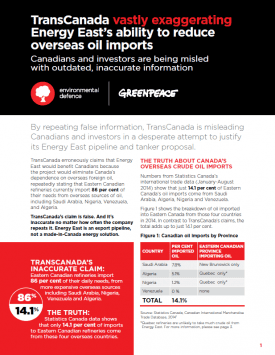
TransCanada has been misleading Canadians and investors by repeating false information in a desperate attempt to justify its Energy East pipeline and tanker proposal.

Join The Community
Join more than 50,000 other committed, caring individuals and stay connected with us as we create a cleaner, healthier, more prosperous Canada to pass on to future generations.
As a subscriber to Environmental Defence, you will receive our monthly Defender News – a roundup of our biggest news stories of the month. You can also receive quarterly updates from our team on specific campaign areas tailored to your interests.
Please select the campaign-specific updates you’d like to receive from the list below.